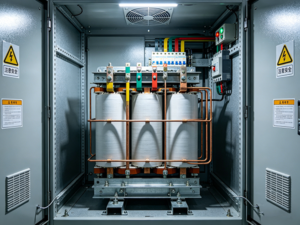
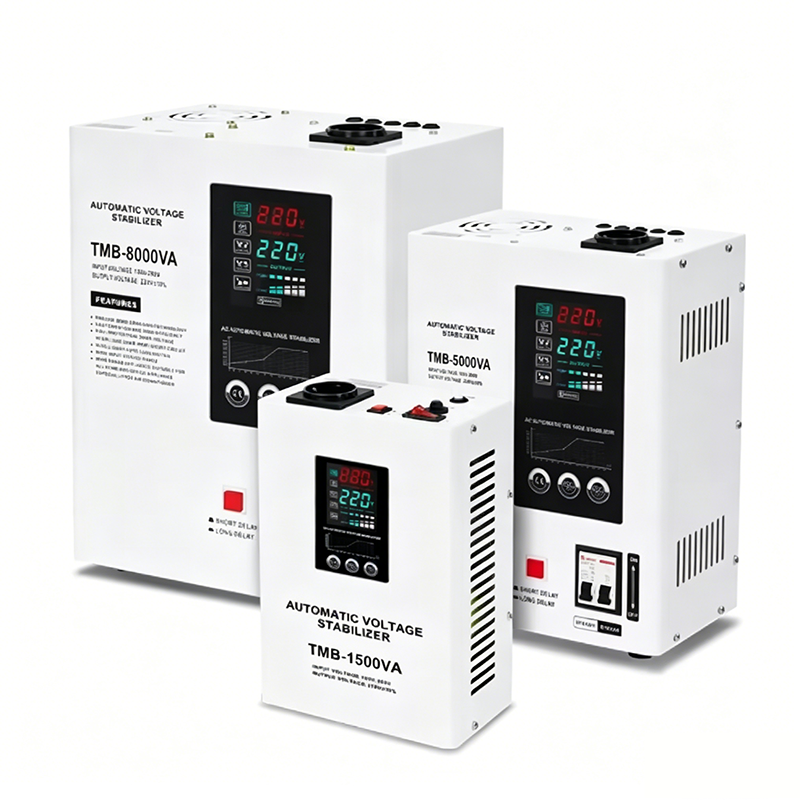
The dry-type transformers produced by the transformer manufacturers are an important type of power equipment. Generally speaking, the application of transformers is quite extensive. When dealing with the faults of transformers, it is necessary to pay attention to the types of faults and the solutions. This will be of great benefit for the future application of transformers and the resolution of faults. What are the types of faults and categories of faults for transformers? Let’s take a look together with our transformer manufacturer’s editor: We all know that dry-type transformers have an important role in adjusting and improving the voltage in the circuit. For dry-type transformers, the adjustment is carried out according to the specific voltage of the circuit. Generally, dry-type transformers have five levels, and each level has different adjustment methods. However, usually, the adjustment is based on the voltage level.
1. Insulation faults of the winding and inter-turn of the dry-type transformer. The winding and inter-turn insulation of the dry-type transformer are relatively easy to fail. Long-term overloading operation or poor heat dissipation conditions. Long service life can easily cause the insulation of the transformer winding to age and crack, and the electrical strength greatly reduces. Transformers subjected to short-circuit impact, the winding is deformed under the force, hidden insulation defects, and once encountering voltage fluctuations, it may also break the insulation. Water enters the transformer oil, which will greatly reduce the insulation strength and cannot withstand the allowable voltage, causing insulation breakdown. At the high and low voltage winding parts, due to insulation expansion, the oil channels are blocked, which also affects heat dissipation, causing excessive aging of the insulation, and thus resulting in short-circuit faults. Due to imperfect lightning protection measures, insulation breakdown may also occur.
2. Insulation faults of the lead wires. The lead wires of the transformer are connected to the external circuit through the inner cavity of the transformer bushing. The lead wires rely on the bushing insulation. If the bushing is not sealed tightly, water will enter, causing insulation moisture and breakdown, and in severe cases, the oil tank will be exposed to the air, causing internal flashover and failure at the connection point.
3. Insulation faults of the iron core of the transformer. The iron core of the transformer is made of silicon steel sheets stacked together. There is an insulating paint film between the silicon steel sheets. If the silicon steel sheets are not fixed properly, the paint film will be damaged, causing eddy currents. The screws and pressure plates that clamp the iron core, if the insulation is damaged, will also cause overheating. In addition, if iron shavings or iron dross fall into the transformer, it will cause iron core faults.
4. Flashover and explosion of the bushing of the dry-type transformer. The high-voltage side of the transformer mostly adopts capacitor bushings. Due to poor porcelain quality with sand holes or cracks, defects in the capacitor itself, internal free discharge, or poor sealing of the bushing, there may be oil leakage, and the bushing is dirty, which may cause flashover and explosion.
5. Faults of the tap changer. Faults of the tap changer are one of the common faults of transformers. Often, due to insufficient contact area, contact failure occurs, resulting in short-circuit faults, and eventually burning out the transformer.